"The Bablumn: Gateways Across Morocco" by Anthony Darin
The door, or bab (باب) in Arabic, is a central element of traditional Islamic architecture. Because most early houses lacked windows (as traditionally, privacy was highly valued), the bab was the defining feature of a building's facade. Therefore, the bab became more than a purely functional entrance, but a canvas for artistic expression. While larger, street-facing windows are now common in architecture originating from the colonial or post-colonial periods, the bab is still an integral feature of Moroccan architecture. In this photo essay, these doors will serve as the key to unlocking a deeper understanding of Moroccan history and architecture.
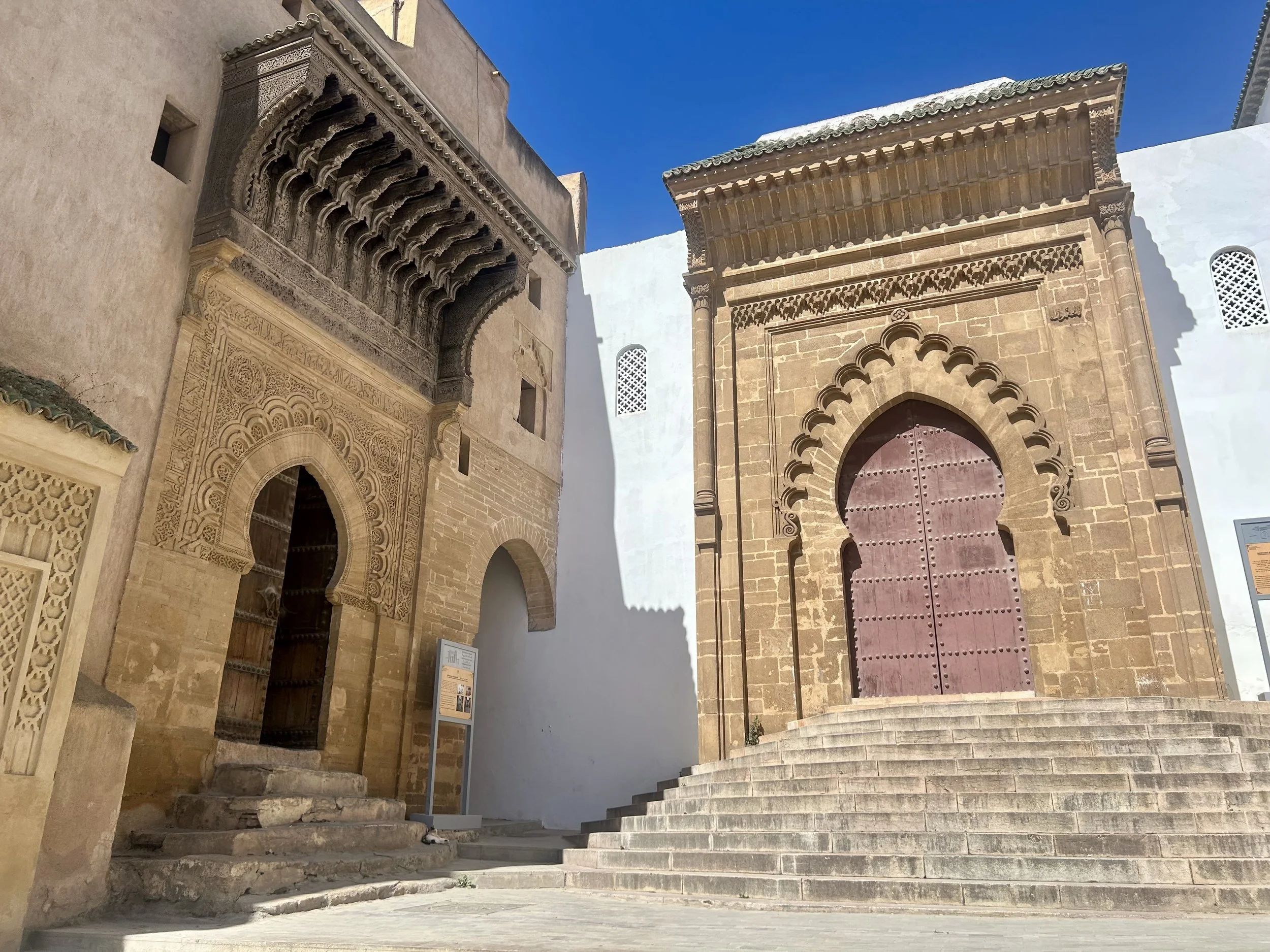
This bab, located in the center of the Medina of Tangier, exemplifies many of the ornate entrances you will see during your time in Morocco. Note the prevalence of geometric patterns; portraying living things in art is generally forbidden in Islam as it is perceived as a form of idolatry. Photo credit: Darin, 2025.
This bab, also in the Tangier Medina, also displays geometric patterns. Note the block of Arabic text centered above the door. Calligraphy is a common feature in Islamic art, fulfilling an aesthetic role while being able to express meaning (often religious) without depicting living beings. Photo credit: Darin, 2025.
Not all doors are created with the same level of ornamentation. This bab in the Salé Medina is much simpler than the previous two, but geometric patterns could still be seen carved into the top of the door. Wooden doors (usually cedar or oak) are common in Moroccan medinas for their durability, availability, and ability to be carved. Photo credit: Darin, 2025.
This entrance to the Salé Medina, known as Bab Lemrissa, is much more grandiose. A canal used to run through its gateway, which used to extend much deeper. Originally, the horseshoe shaped arch made up only 1/3rd of the opening’s height. Photo credit: Darin, 2025.
This bab serves as the entrance to the medieval fortress of Chellah (located in Rabat). Like Bab Lemrissa, this gateway was erected by the Marinid Dynasty who ruled over most of modern Morocco from the 13th to 15th century. The Marinid’s were known for their extensive use of arches and calligraphy, and much of their work shares similarities with Andalusian architecture (Islamic Spain). Photo credit: Darin, 2025.
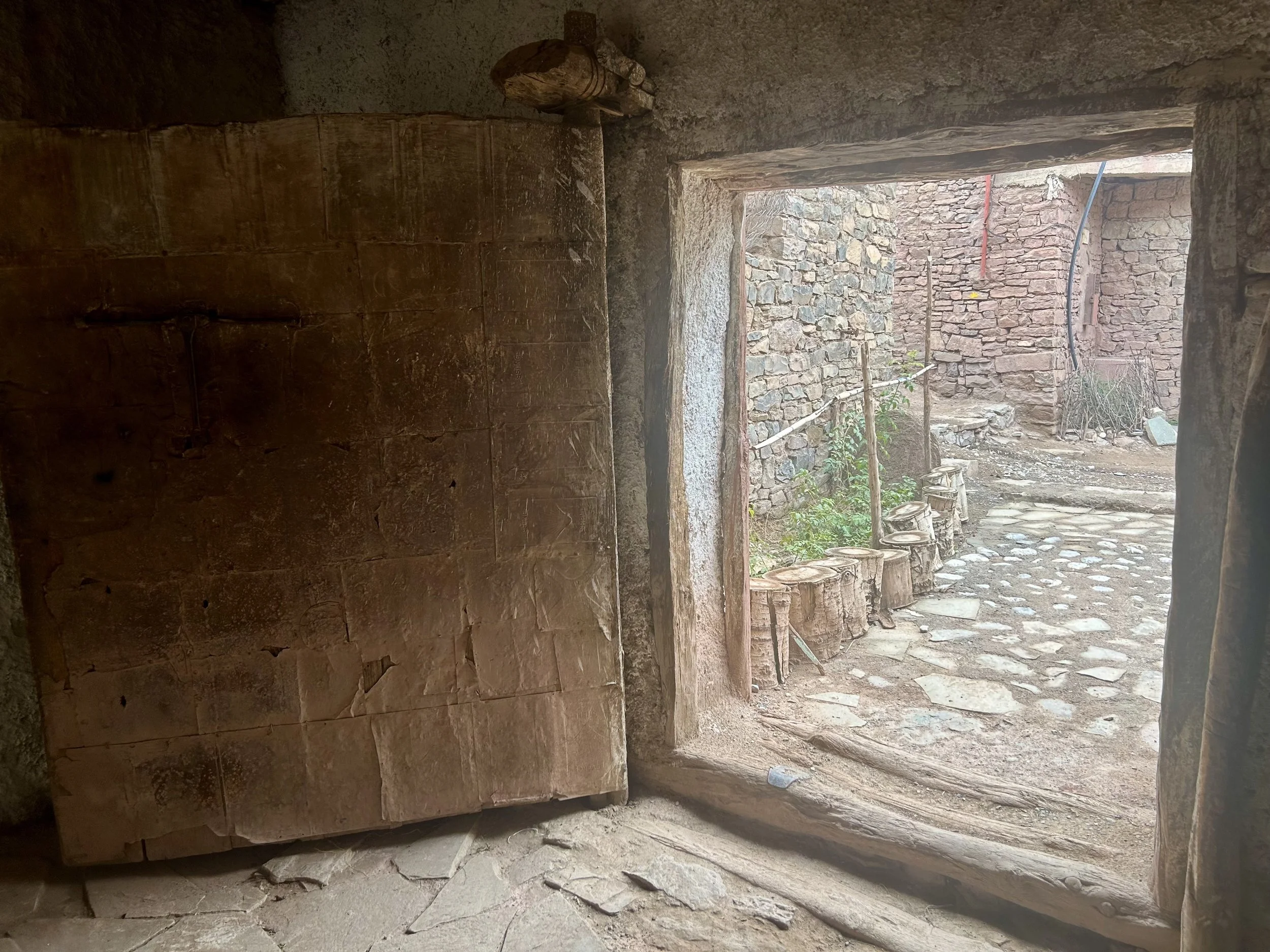
We now move from the imposing Marinid gates, to the more modest wooden doors of Zaouiat Ahansal. These structures, built deep in the rural valleys of the Atlas Mountains, prioritize practicality over aesthetic grandeur. This reflects the community’s focus on using limited resources to adapt to difficult living conditions. Photo credit: Darin, 2025.
The doors within Zaouiat Ahansal’s houses are intentionally built very small. This is to force those who enter to bow their heads, ensuring they enter in a modest manner. Photo credit: Darin, 2025.
I hope this photo essay provided you with a deeper understanding of some Moroccan architectural customs, and I hope it exemplified that the Moroccan bab can come in all shapes and sizes! Photo credit: Darin, 2025.
Anthony Darin is a student at American University and studied abroad in the Fall 2025 on Amideast’s Area & Arabic Language Studies program.