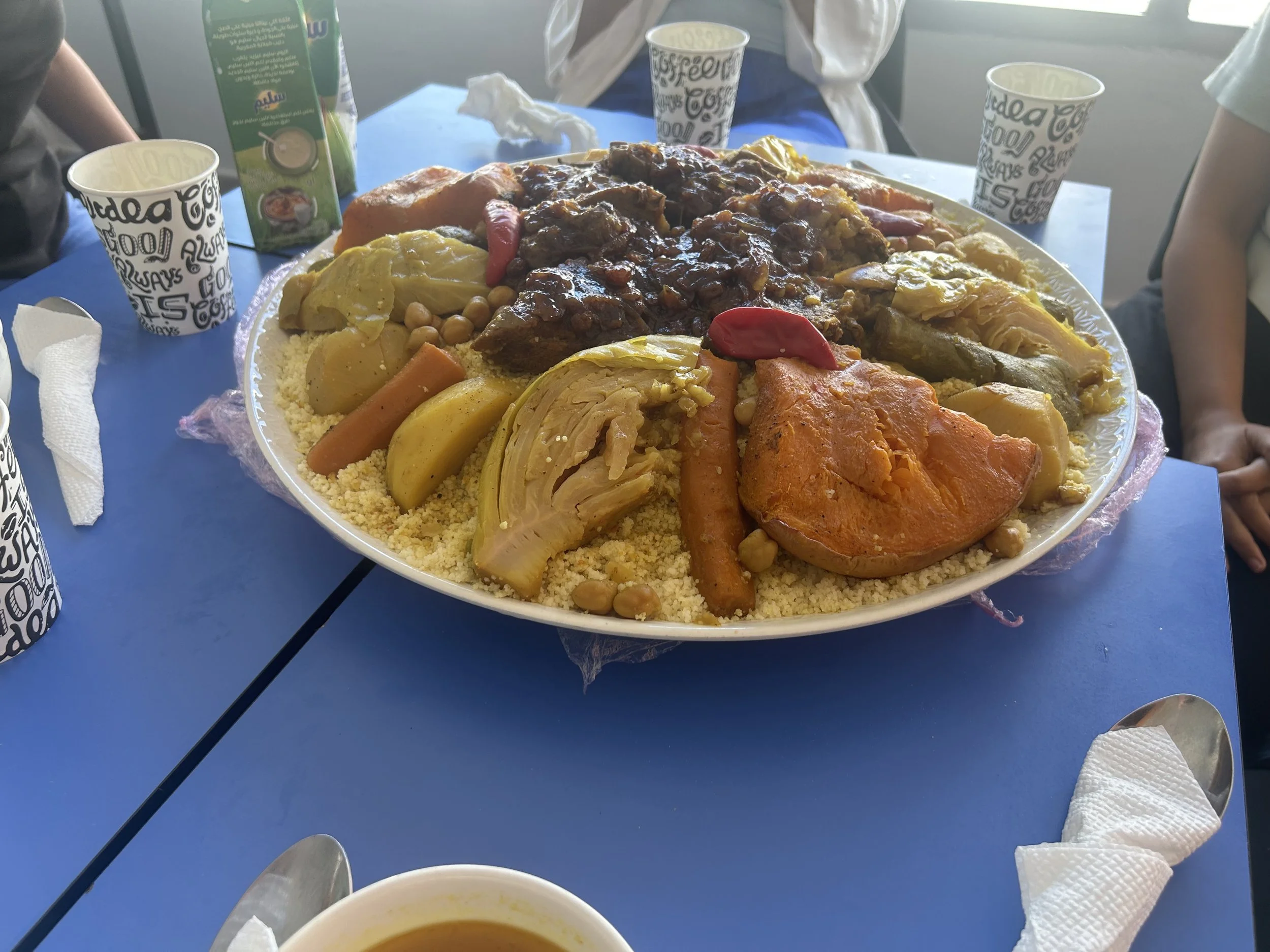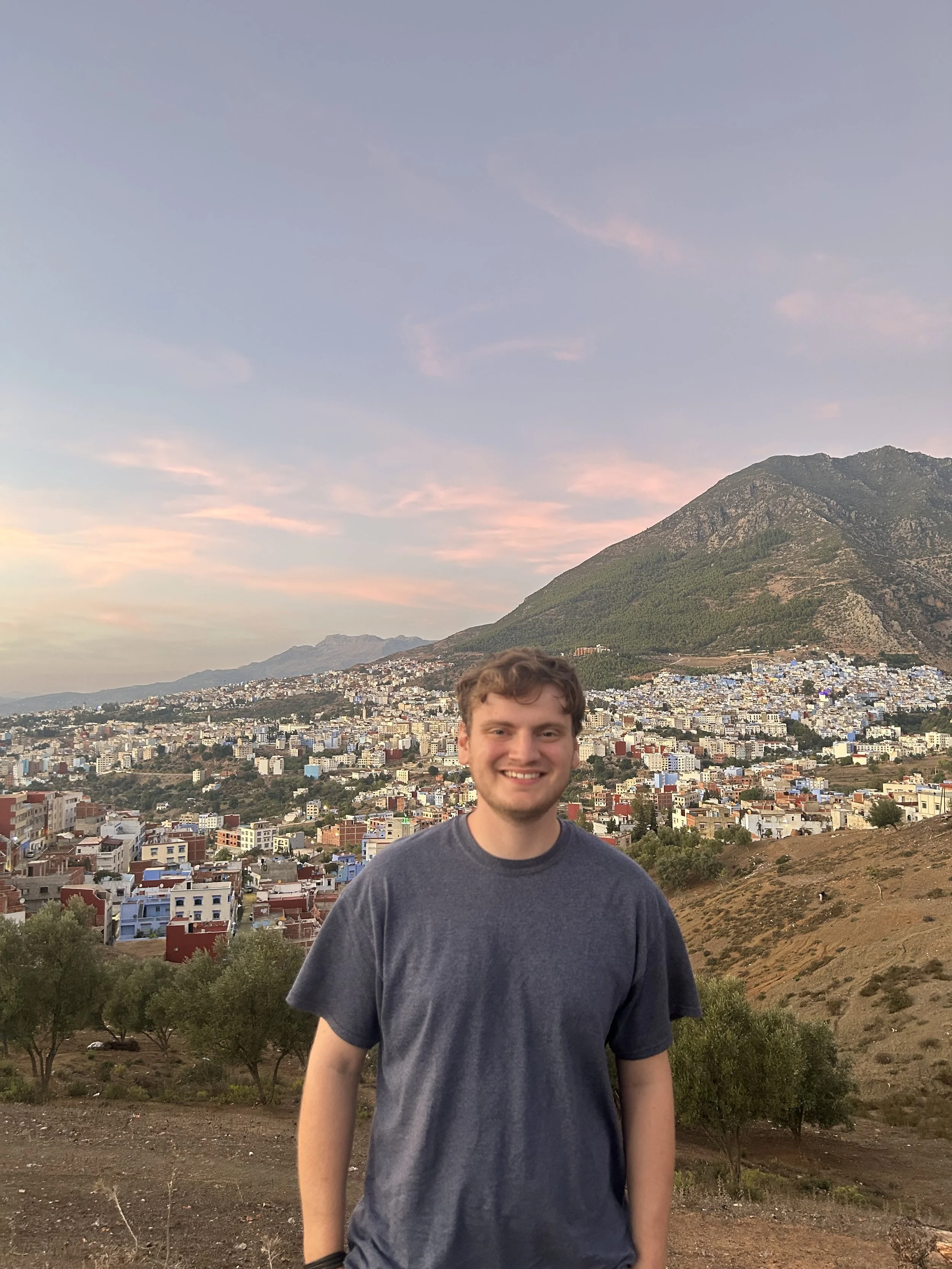
"10 Cities, 10 Facts" by Anthony Darin
If there’s anything I’ve learned throughout my semester in Morocco, it’s that the country holds a story in every corner. From bustling Medina to quiet coastal streets, each city reveals itself through small but powerful details. This blog is a collection of those moments, with one fact from ten cities that helped shape how I saw Morocco and the memories I took home.
Casablanca
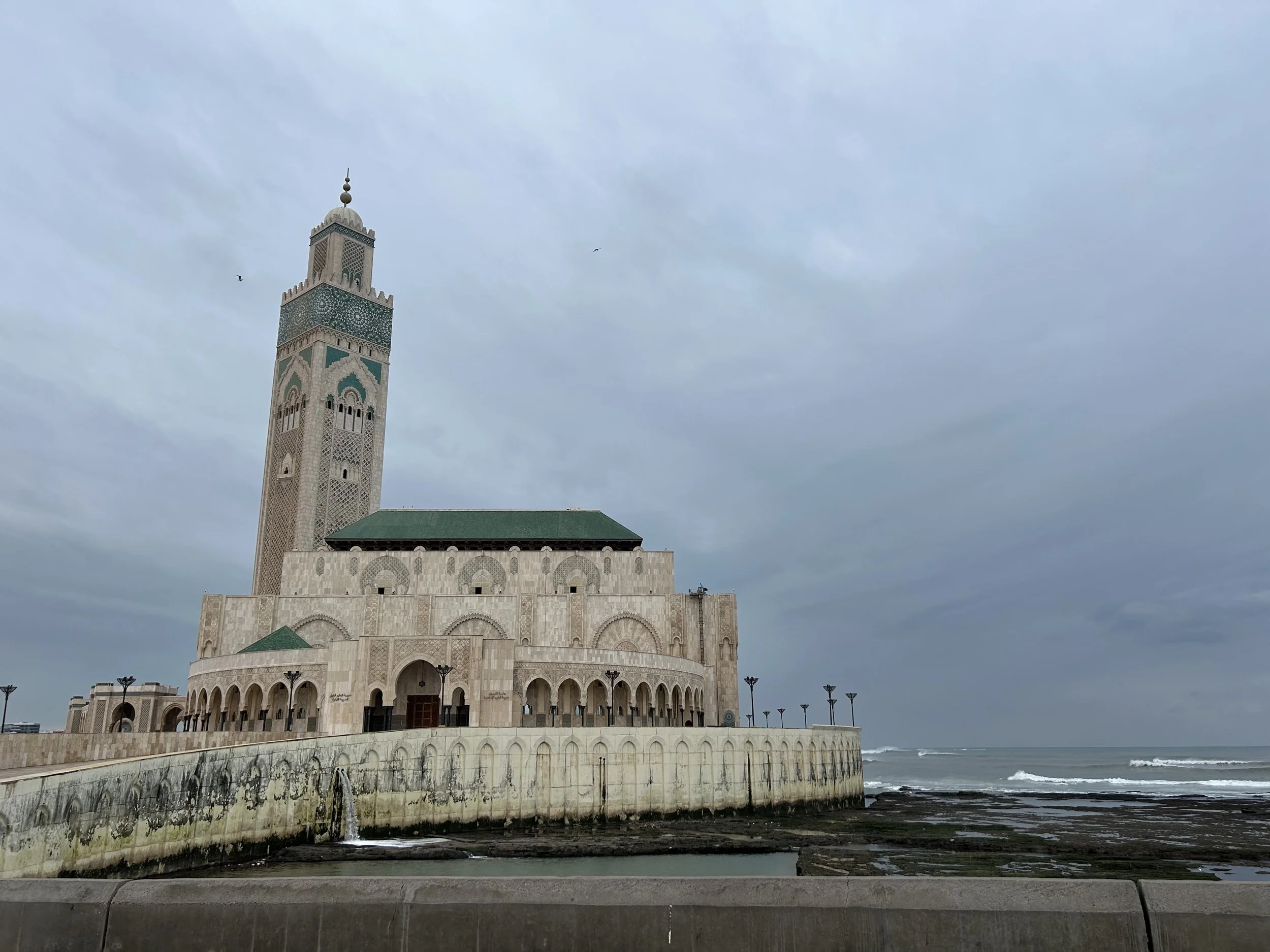
Morocco’s largest city, Casablanca, is perhaps most famous for inspiring the 1942 film of the same name. However, most don’t know that its famous Hassan II Mosque has the second tallest minaret in the world. Standing at 210 meters, or 689 feet, the minaret has towered over Casablanca’s skyline since 1993. Photo credit: Darin, 2025.
Chefchaouen
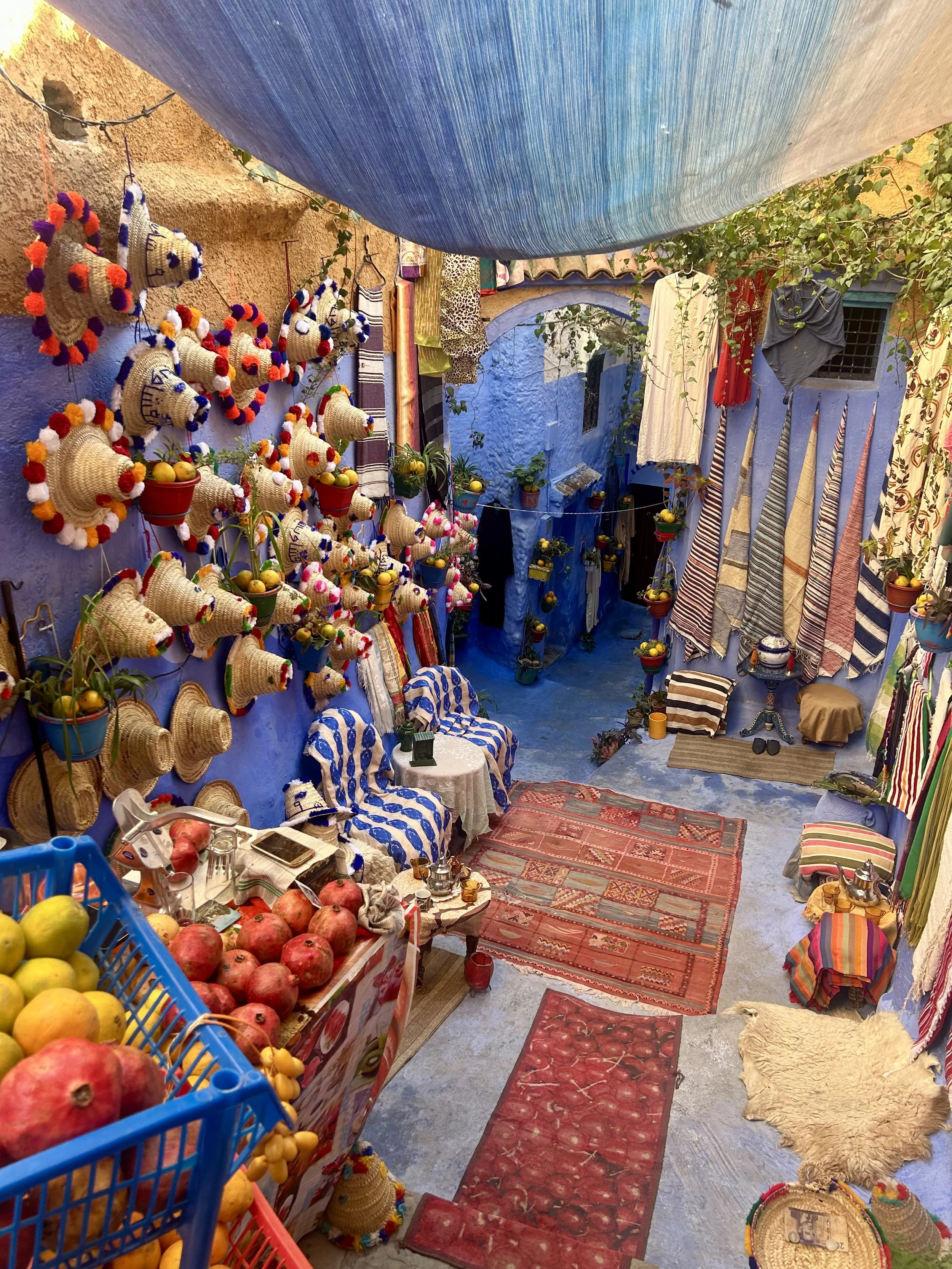
There is no single explanation for the blue-washed buildings that gave Chefchaouen the nickname, “The Blue City”. However, some link the color to the town’s Jewish heritage as Chefchaouen became a place of refuge for Muslims and Jews fleeing the Reconquista of Al-Andalus after the fall of Granada in 1492. Photo credit: Darin, 2025.
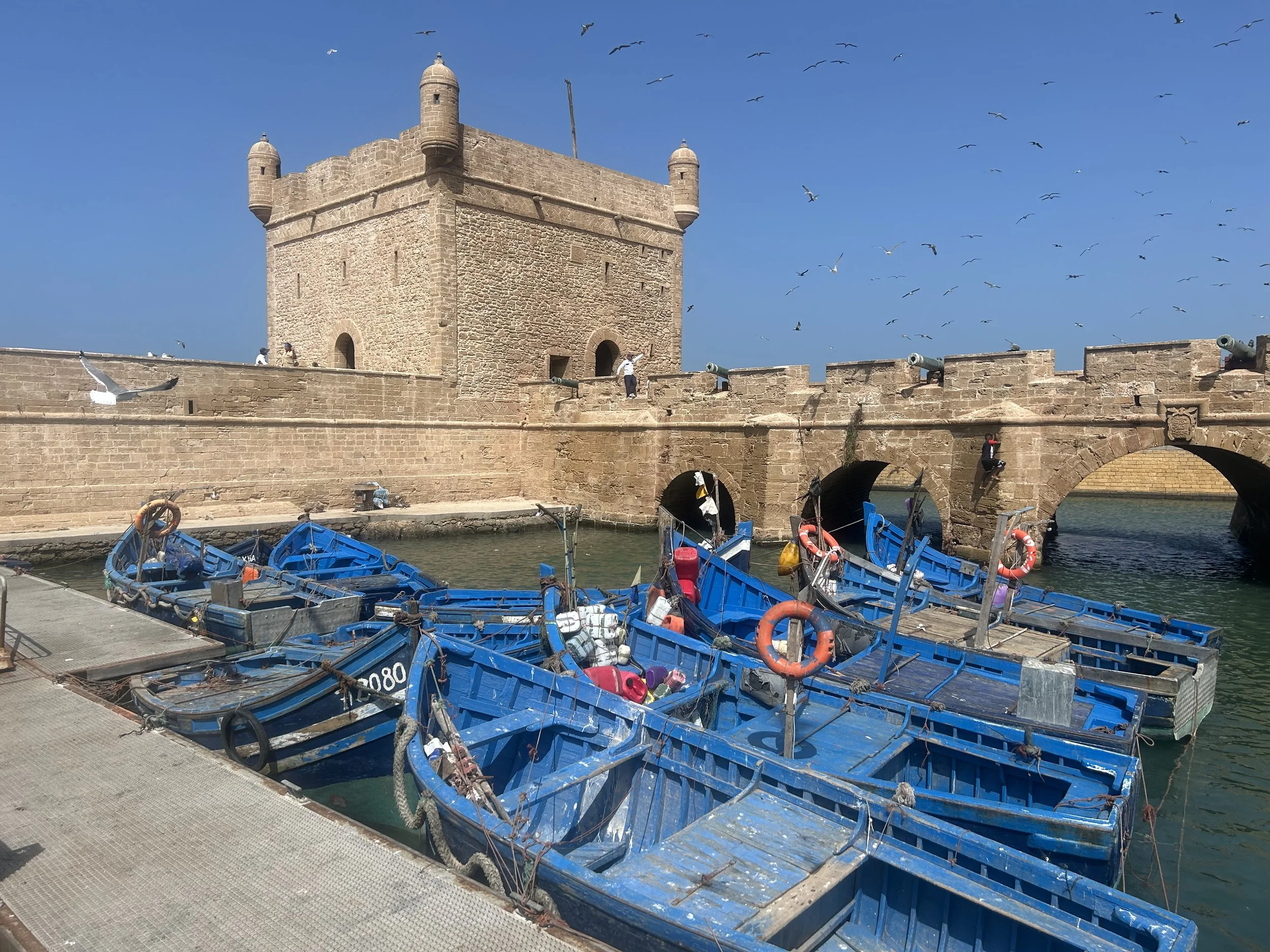
Essaouira
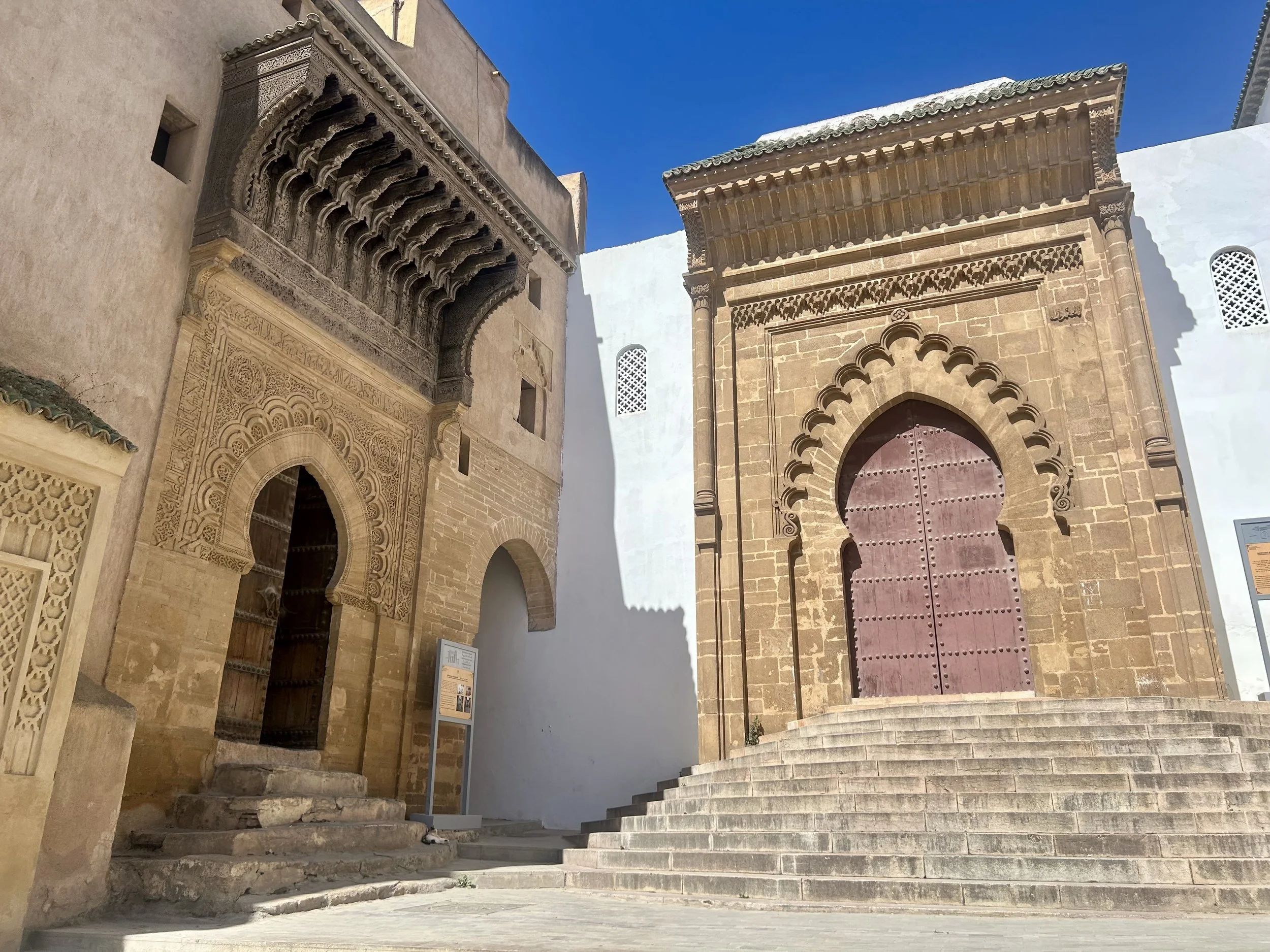
Formerly known as Mogador, the fishing port of Essaouira whose Sqala (pictured above) was featured in the popular TV series Game of Thrones is the birthplace of a music genre known as Gnawa. Gnawa originates from West and Sub-Saharan Africans brought to Morocco as part of the Trans-Atlantic slave trade. The music is traditionally used for spiritual healing rituals, and it is distinguished by the sound of krakeb which mimics the klanking of handcuffs. Essaouira hosts a yearly Gnawa festival in June which attracts music lovers from around the world. Photo credit: Darin, 2025.
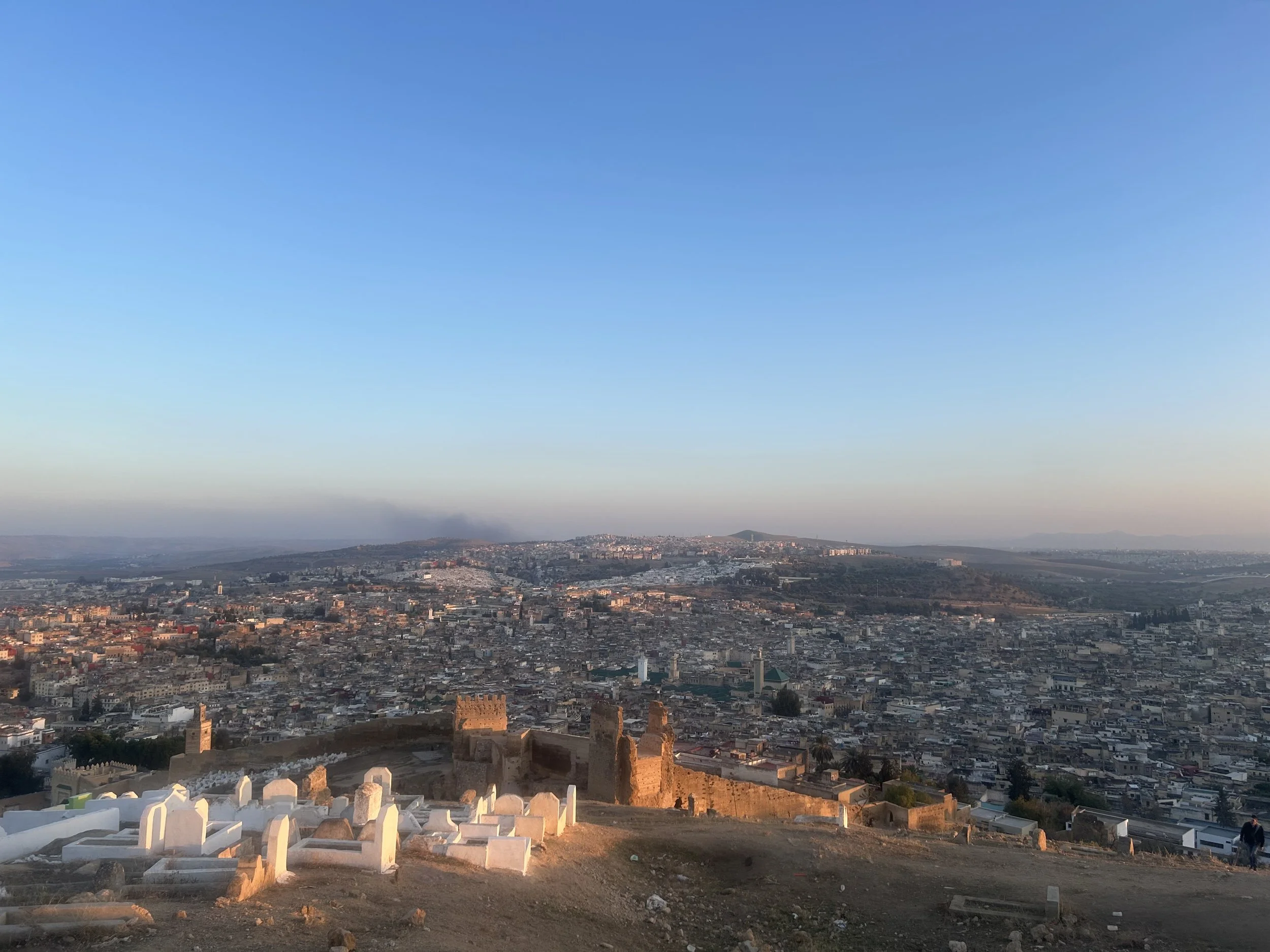
Fes
As Fes was the first imperial capital of Morocco, its medina (the largest car-free urban area in the world) is packed with historical sites, including Al-Qarawiyyin University. Al-Qarawiyyin is the oldest continuously operating university in the world, founded by Fatima al-Fihri in 859 CE. While non-Muslims can not enter as Al-Qarawiyyin also serves as an active mosque, the green roofed building is visible from this lookout point from the Marinid Tombs. Photo credit: Darin, 2025.
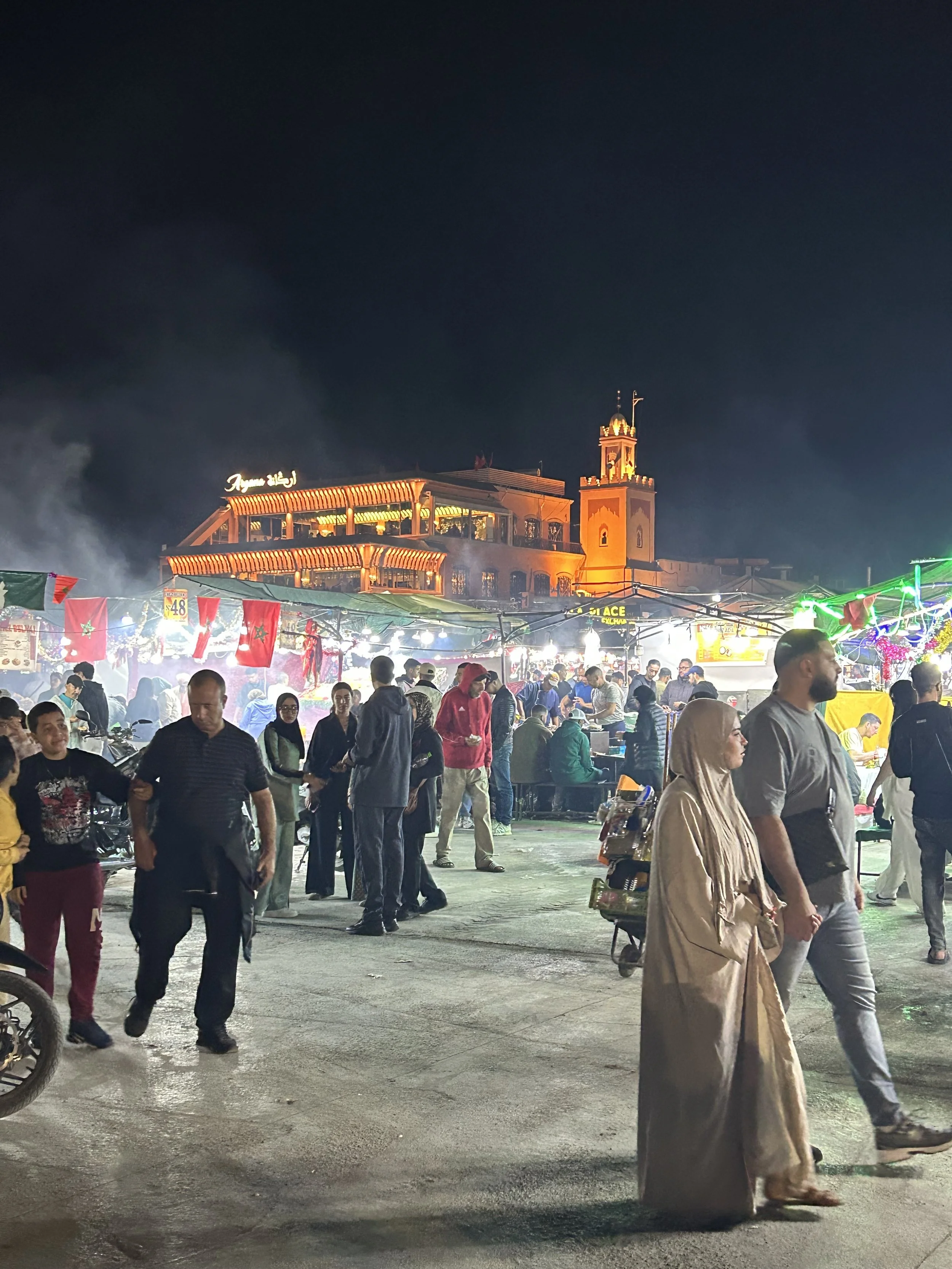
Merrakesh
Jemaa el-Fnaa is the lively heart of Marrakesh. A central hub for storytelling, trading, and public events (including public executions between the 16th and 18th centuries), the square today remains home to street food stalls, snake charmers, and musicians who converge into one of Morocco’s most visited sites. Photo credit: Darin, 2025.
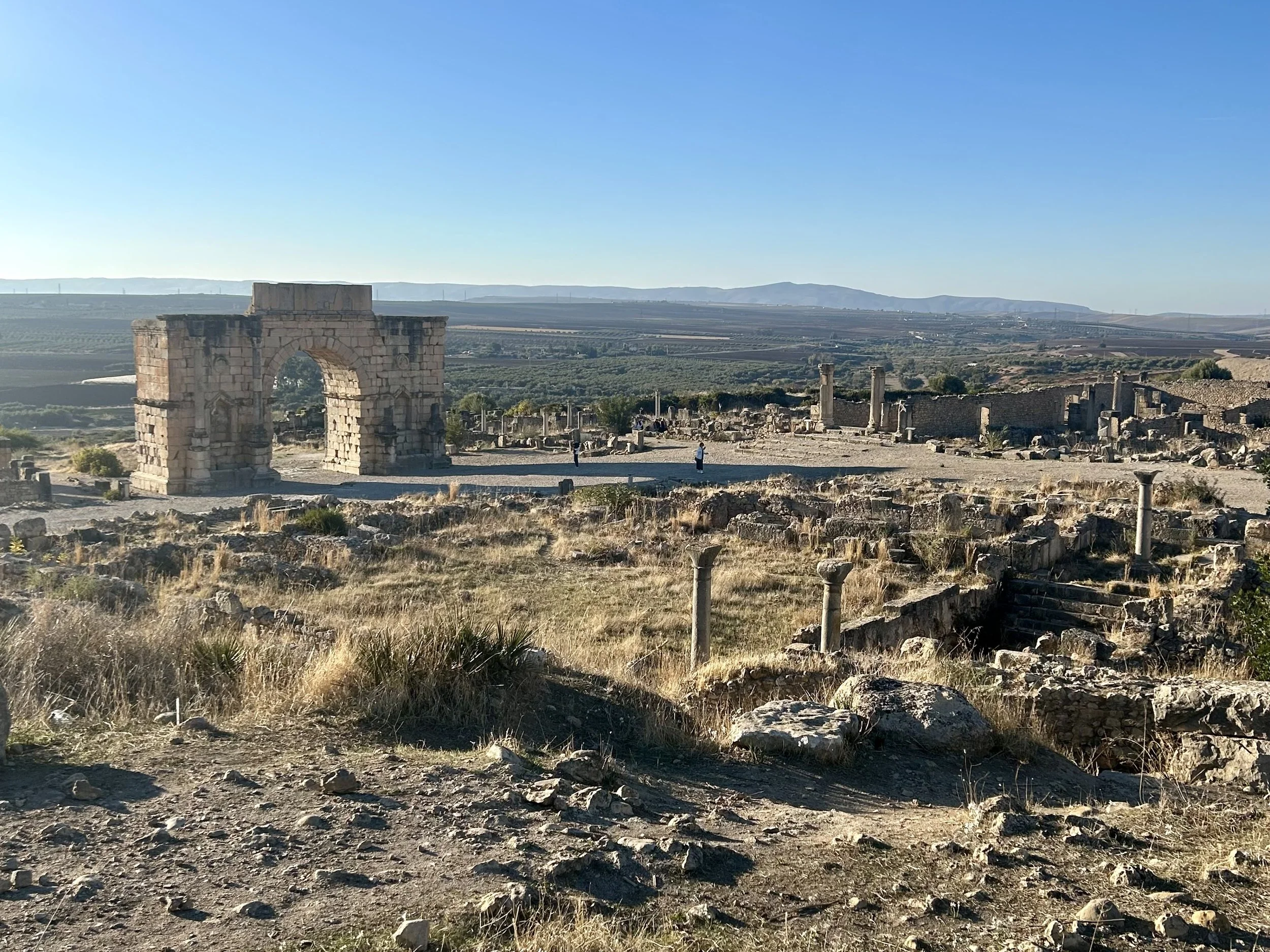
Oualili (Volubilis)
First a Berber settlement, then a Roman settlement, and then the capital of the Mauretanian kingdom, Volubilis (known as Oualili in Amazigh and Arabic) is one of Morocco’s largest architectural sites, covering around 100 acres. Photo credit: Darin, 2025.
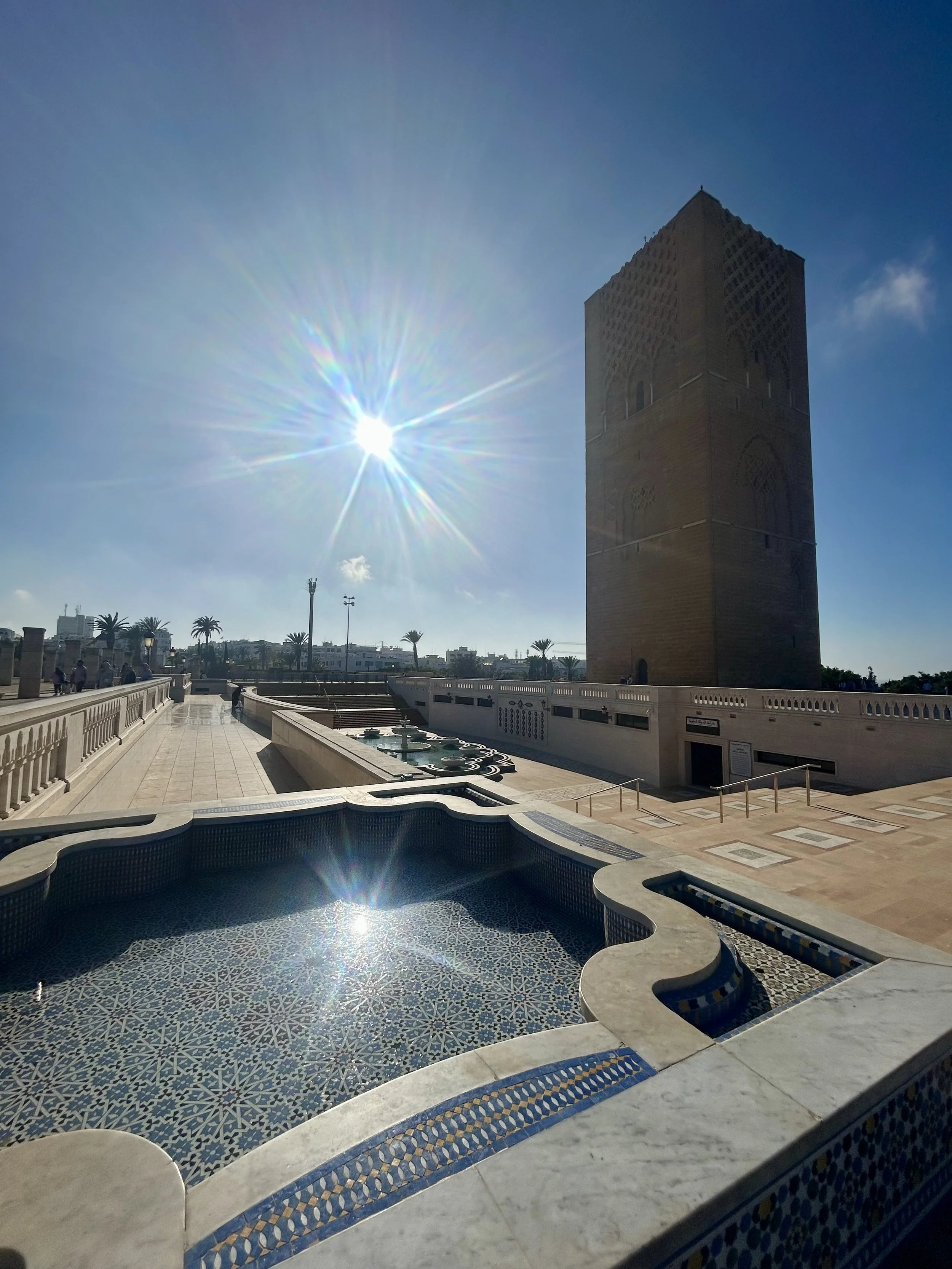
Rabat
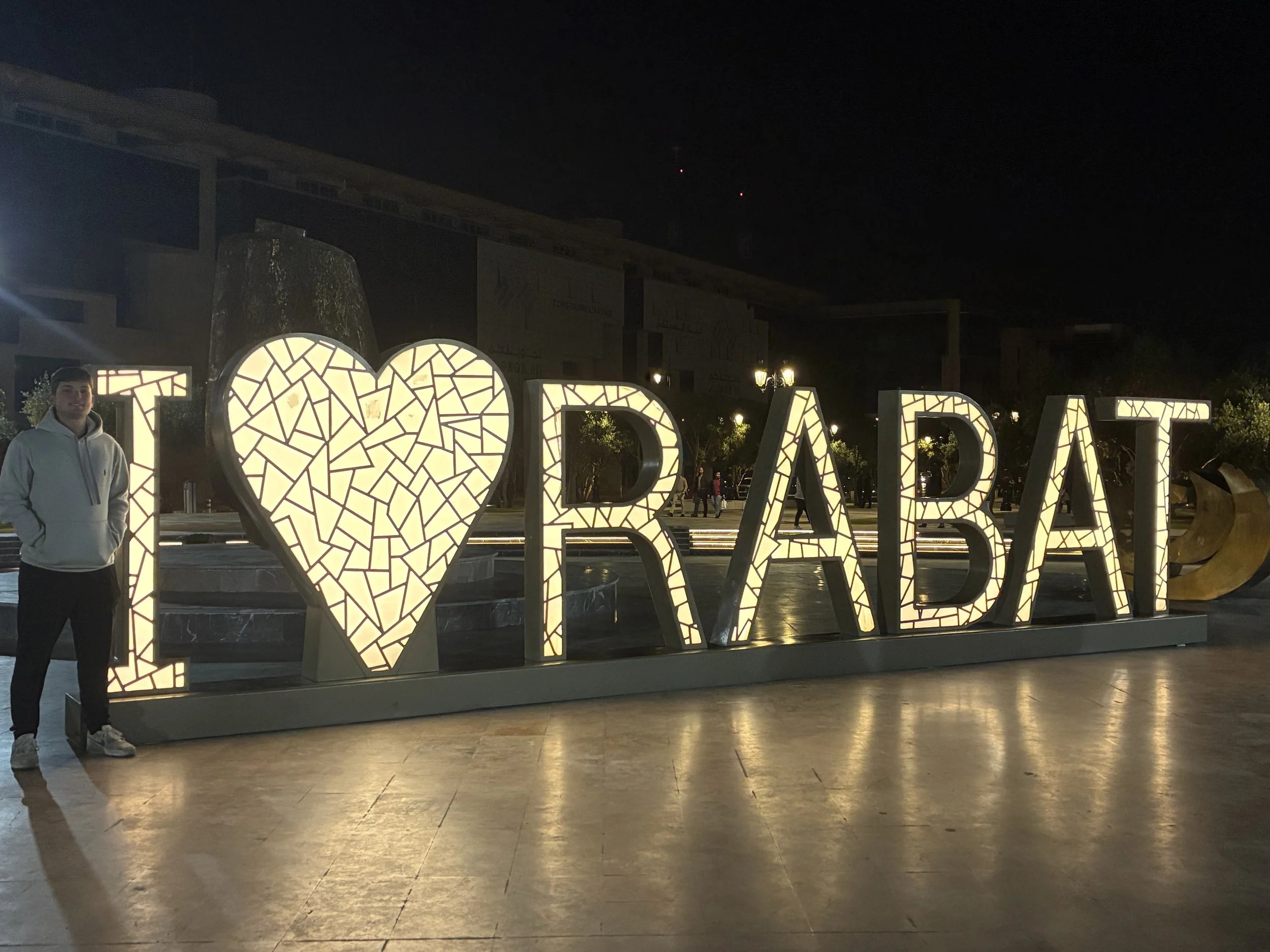
Since 1912, Rabat has been Morocco’s political and administrative capital–first under the French Protectorate, and then as the capital of an independent Morocco since 1956. The Hassan Tower in Rabat was meant to be the largest minaret in the world, but the construction (which began in 1195) was never completed. This is likely due to the death of Sultan Yacoub al-Mansour of the Almohad Dynasty who commissioned the project. Photo credit: Darin, 2025.
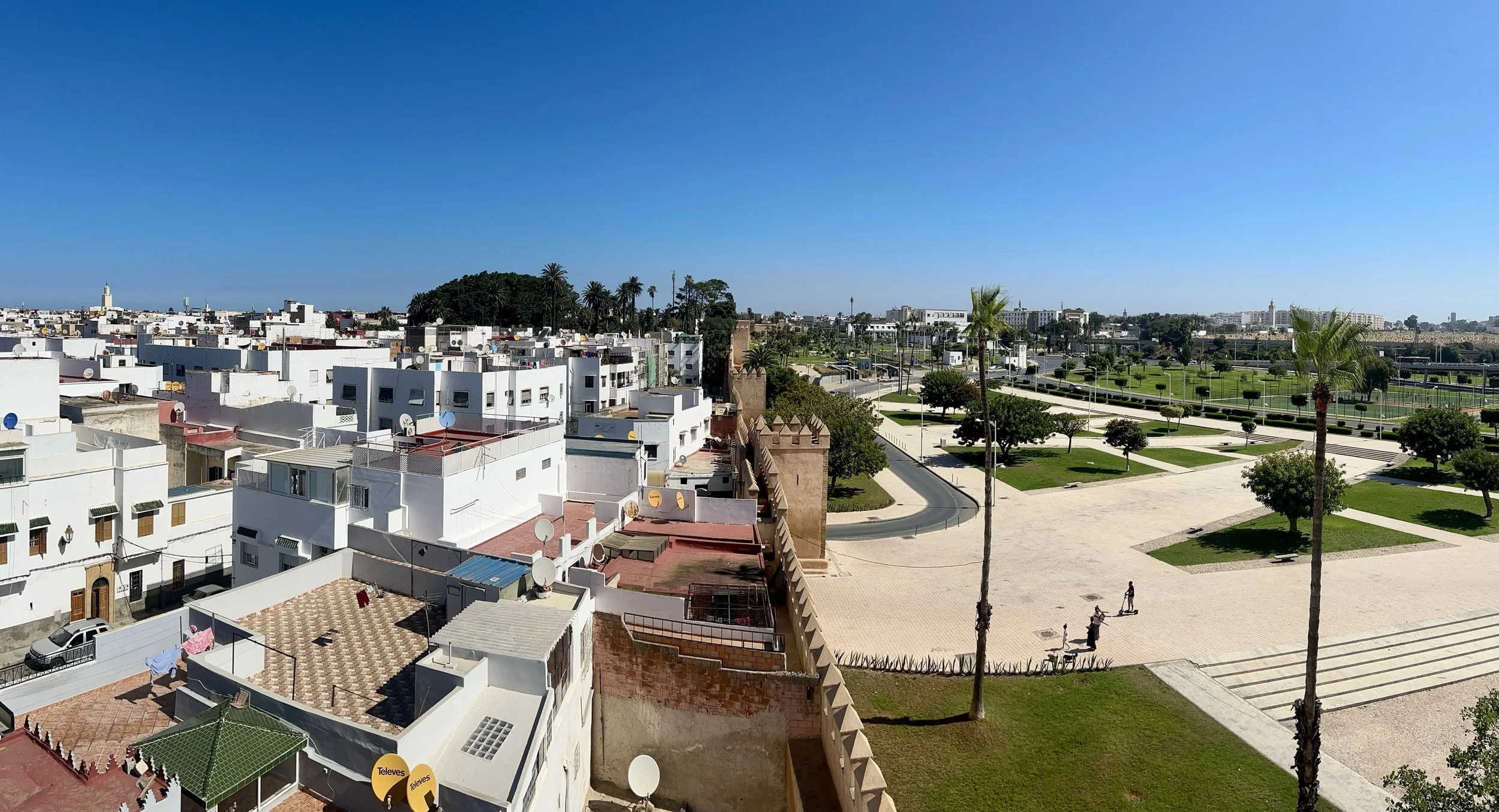
Salé
Lying across the river from Rabat, Salé served as a pirate haven during the 16th and 17th centuries. The feared Salé Rovers were known for their daring raids targeting European merchant ships along the Barbary Coast. Many of these pirates were Muslim refugees who were exiled from Spain following the Reconquista. Photo credit: Darin, 2025.
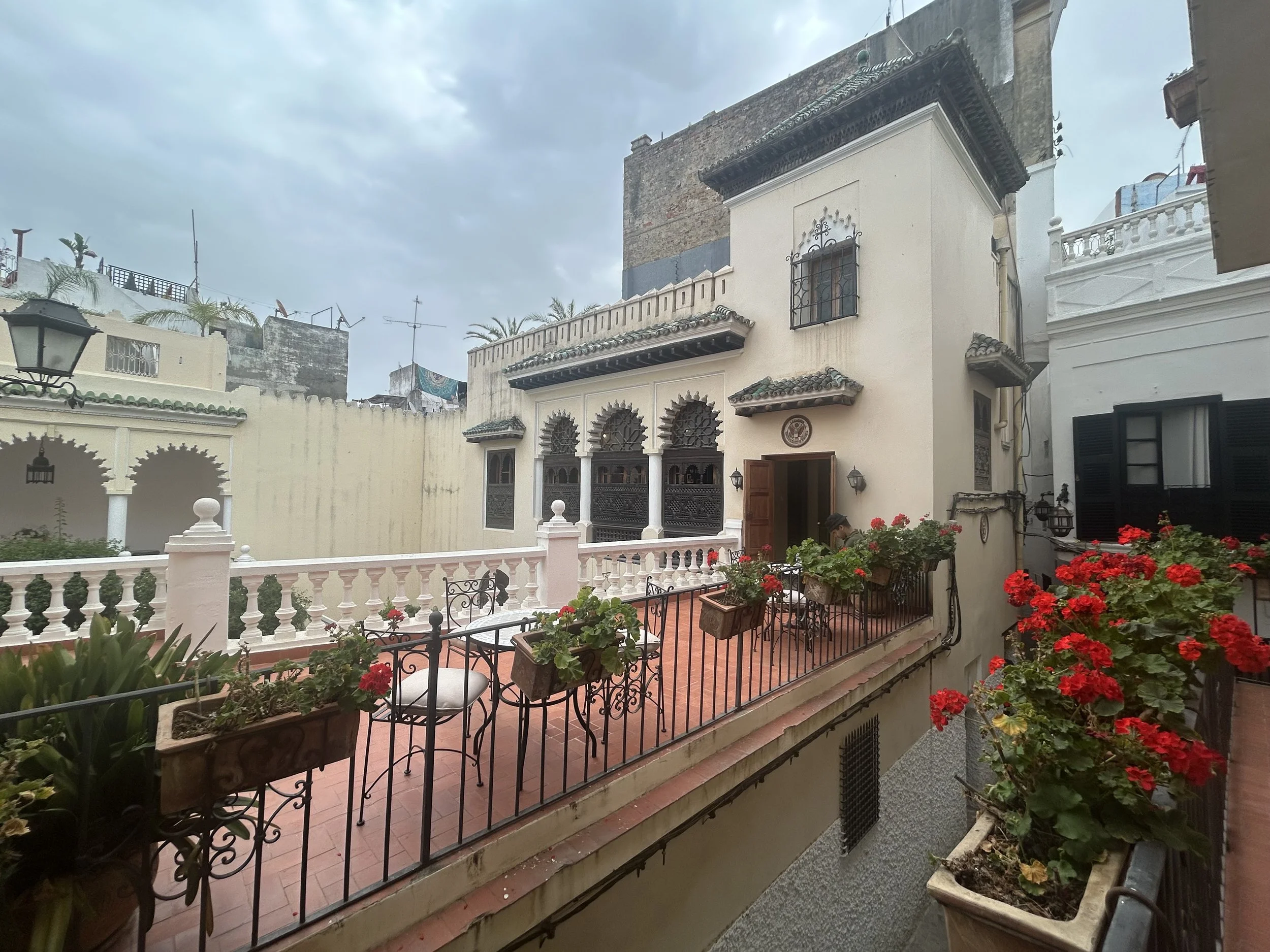
Tangier
Between 1923 and Morocco’s independence from the French in 1956, Tangier served as a European-controlled international zone, administered by several different countries for its strategic importance on the Strait of Gibraltar. Tangier’s prominence as a diplomatic site also extends far beyond 1923, as in 1777, the first U.S. embassy in the world was opened here (now the American Legation Museum pictured above). Photo credit: Darin, 2025.
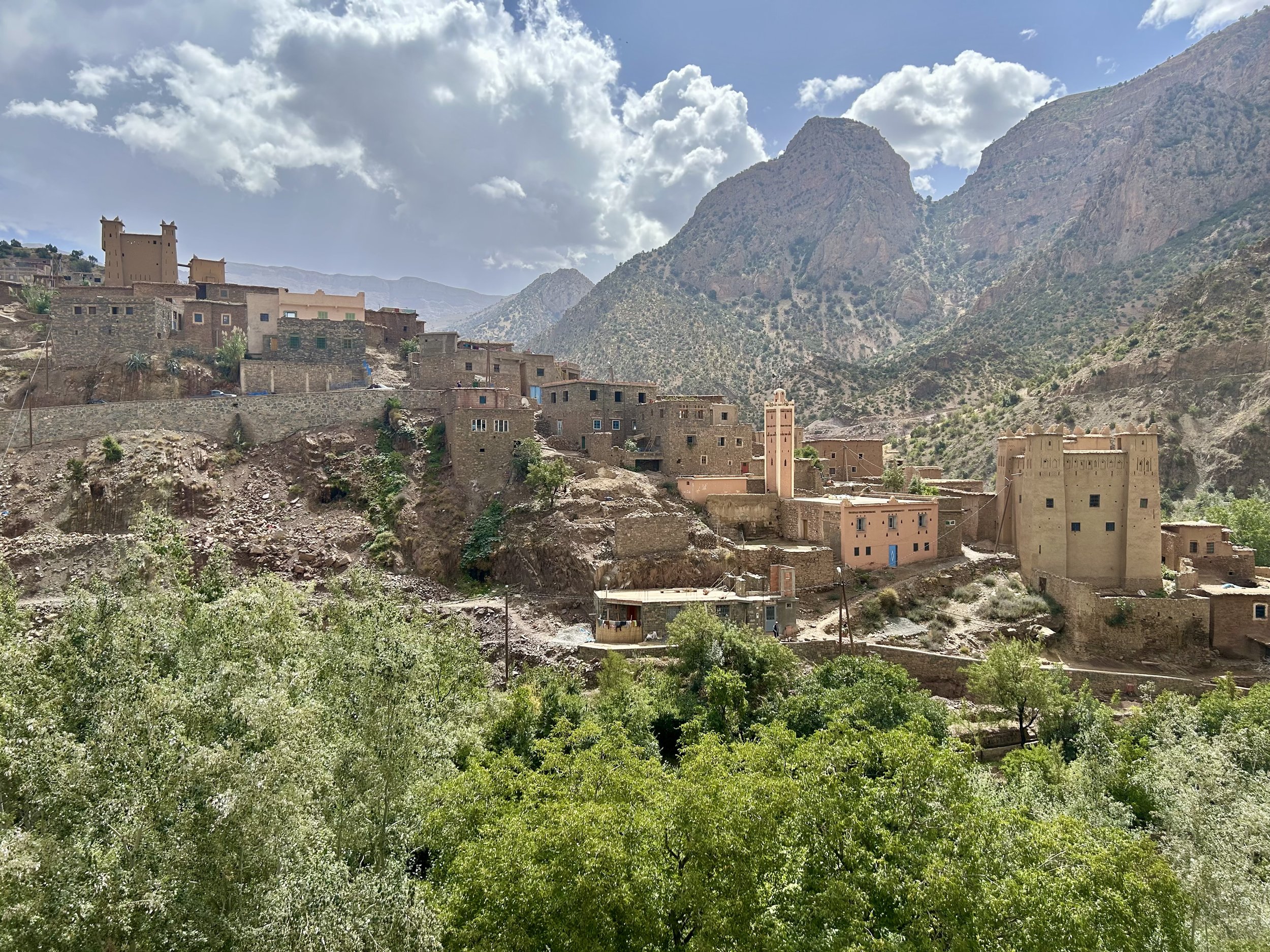
Zaouiat Ahensal
The small Amazigh village of Zaouiat Ahensal is located deep within Morocco’s High Atlas Mountains, and it is an important pilgrimage site for many in the region. This is because Zaouiat Ahensal is home to the tomb of Sidi Said Ahansal, a 13th century Islamic scholar who is considered to be a saint by many within the Sufi tradition. Photo credit: Darin, 2025.
Anthony Darin is a student at American University and studied abroad in the Fall 2025 on Amideast’s Area & Arabic Language Studies program.