"Tifinagh Workshop!" by Nadia Rassech
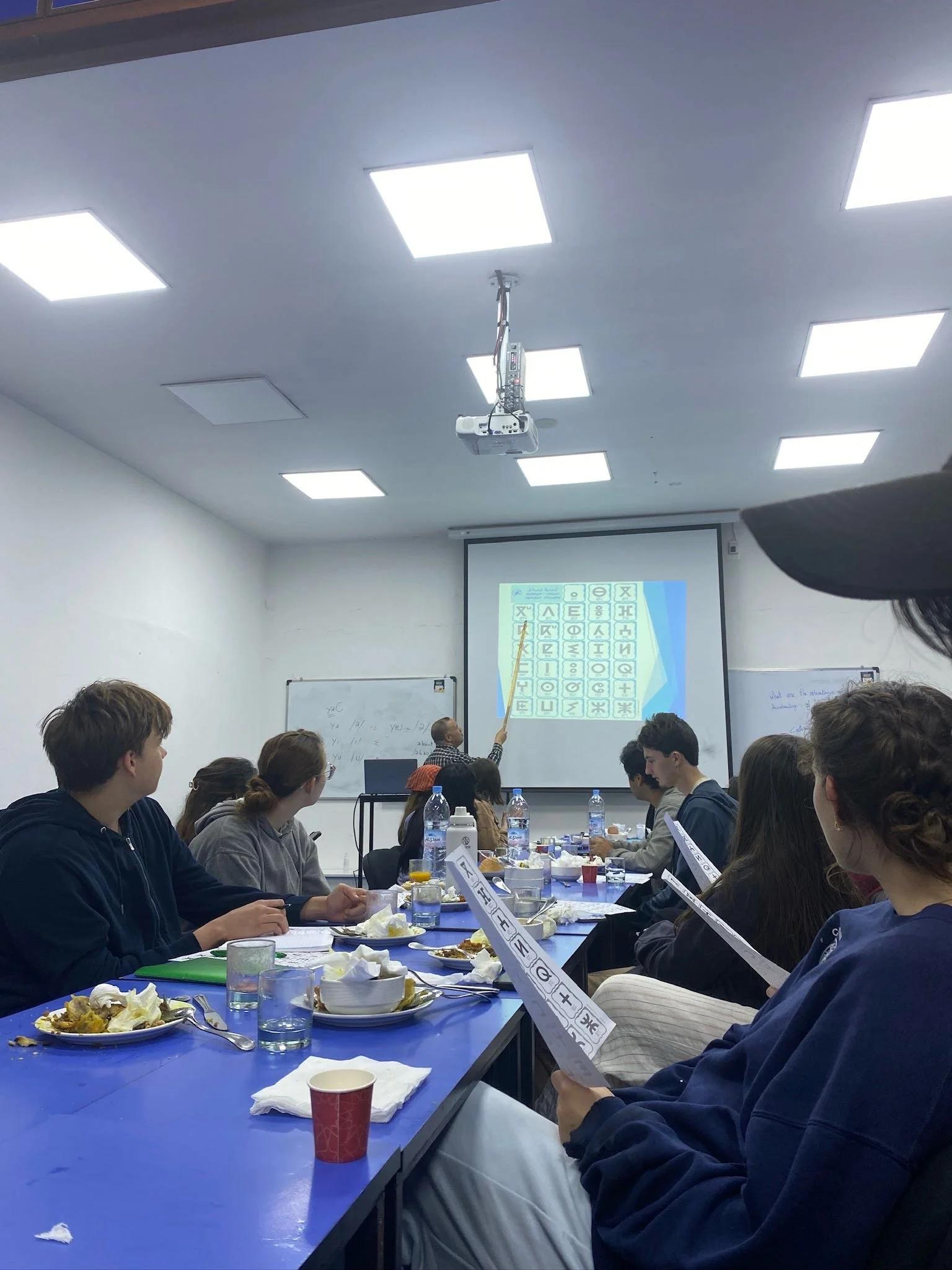
Upon arriving in Morocco, there are three scripts that you find posted on street signs, government buildings, and more. Arabic, Latin, and Tifinagh. Tifinagh is the writing system for the standardized version of the Amazigh language which was adopted as an official writing system in Morocco in 2011. The Amazigh language belongs to the native Amazigh population of Morocco, pre-Arab conquest. The majority of Moroccans thus have some Amazigh roots, and Amazigh culture is inseparable from Moroccan identity. The following blog post includes photos from a Tifinagh workshop hosted by Amideast, alongside some pieces of information related to the alphabet and its history!
Firstly– the letters themselves. Unlike Arabic, the letters do not change form based on their position in a word. There’s a fair amount of resemblance between the Arabic and Tifinagh alphabets regarding sounds produced, despite the lack of similarity between scripts. Amazigh has 29 consonants, 4 vowels. It is a phonetic language, meaning words are spelled just as they are said, unlike English, where how we pronounce a letter changes based on the word/context.
There are three main subtypes of Tifinagh: Moorish, Numidian, and Libyan. Much of Neo-Tifinagh comes from Moorish origins – the Amazigh kingdom which had spread throughout much of Morocco and Mauritania around 300BC. The Numedian letters were helpful in creating Neo-Tifinagh as well, due to the finding of translated letters into Phoenecian in Carthage. The Libyan style of writing has survived till today, unlike the Moorish and Numidian styles.
The Royal Institute of Amazigh Culture was established in 2001 by King Mohammed VI, and one of its key roles was coordinating amongst Amazigh researchers and linguists to build a standardized version of the Arabic language. Key criteria for the creation of Neo-Tifinagh was: simplicity, eligibility, coherence, sign univocity, geographical extension, and the neutralisation of linguistic variation.
As for the Amazigh languages themselves (and the multitude of dialects), it is spoken widely throughout North Africa and beyond — Morocco, Algeria, Tunisia, Mauritania, Libya, Burkina Faso, Egypt (Siwa Oasis), Niger, Mali, Canary Islands. In Morocco, there are three main dialects of Amazigh: Tashelhit in the South (High Atlas, Souss Valley), Tamazight in the middle (Middle Atlas), and Tarifit in the North (Rif Mountains).
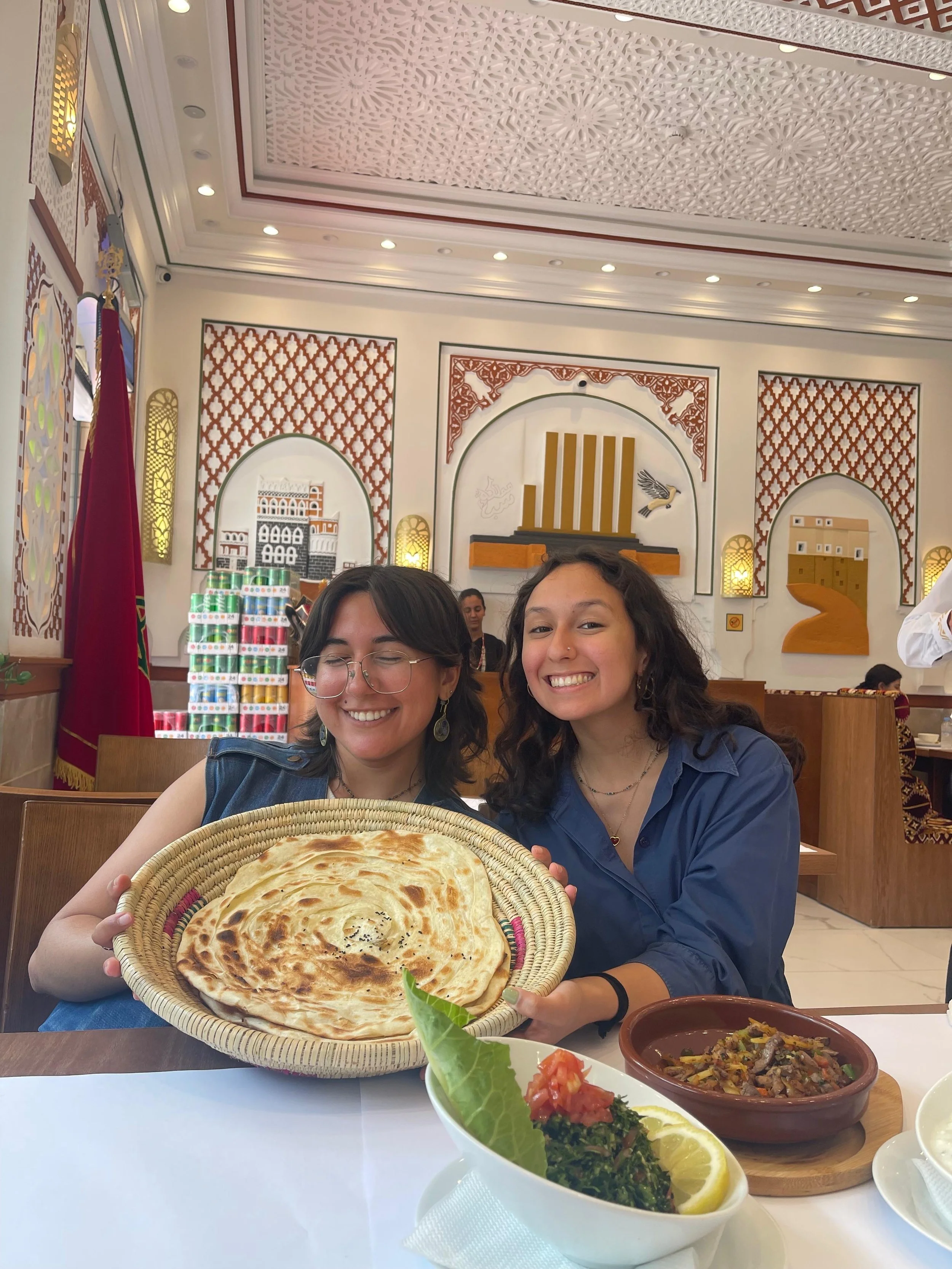
Below are some photos from the workshop!
Nadia Rassech is a student studying abroad in the Spring 2026 on Amideast’s Area & Arabic Language Studies program in Rabat, Morocco.