"Essaouira and Had Draa" by Nadia Rassech
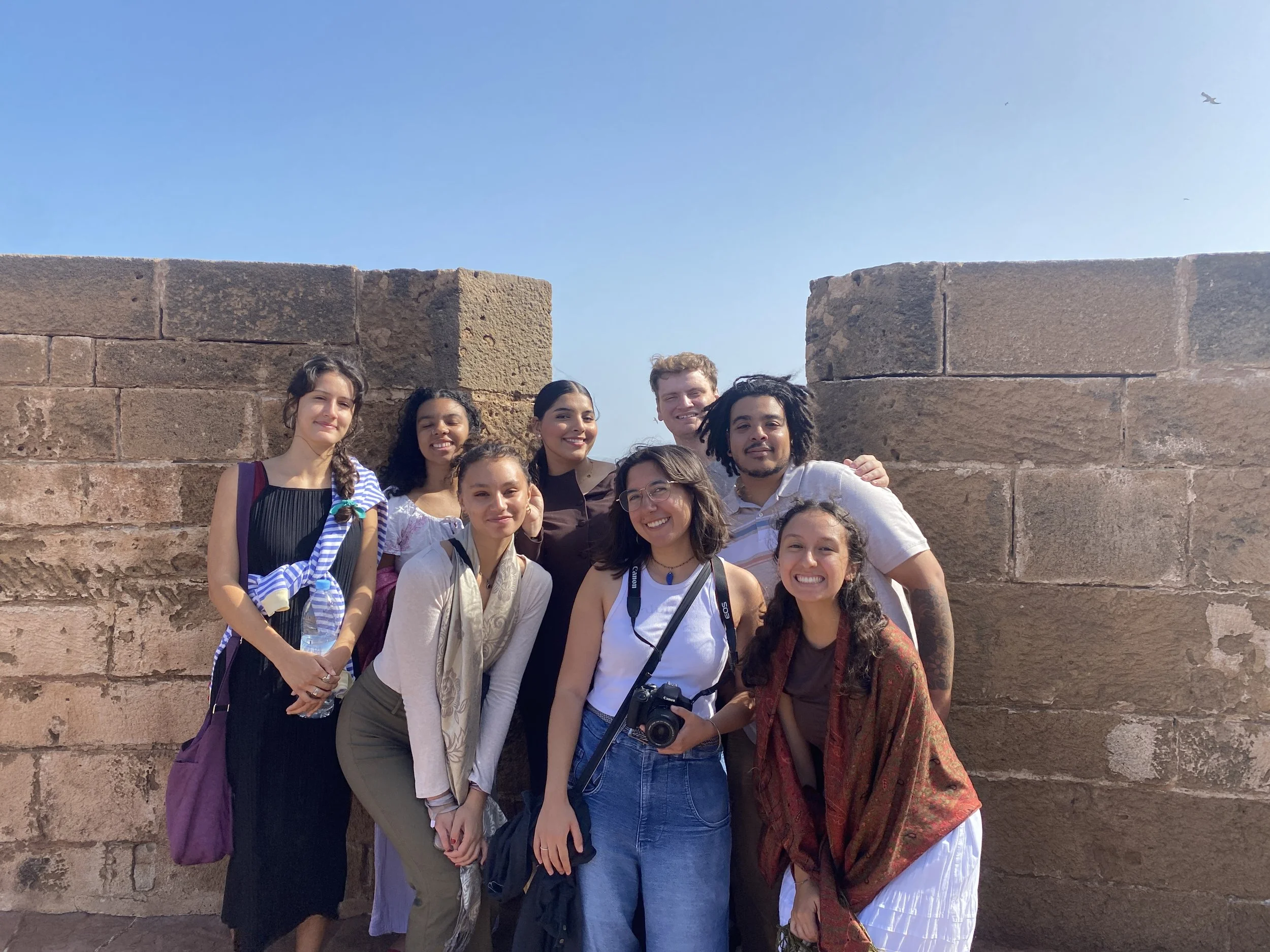
This past weekend brought a group of Amideast students to Morocco’s windy city — Essaouira. A coastal town, Essaouira is known for a few things: its beaches, surf tourism, and gnawa music festivals. After a nearly 8 hour journey, we settled in a hostel in the medina for a two night stay. Below are a series of photos taking you through our weekend exploring Essaouira and its neighboring town Had Draa.
Note: some of the below photos depict dead animals, notably from visits to fish and meat markets. Proceed with caution if this might make you uncomfortable!
The Sqala of the Port, overlooking the fish market, attracts plenty of seagulls. Built in 1765 alongside the Sqala of the Kasbah to defend the city from sea attacks, it is a UNESCO world heritage site. Photo credit: Rassech, 2025.
Walking through the Sqala of the Kasbah, we came upon the Essaouira ramparts – lined with bronze Spanish canons from the 1500s. If you watch Game of Thrones, this scene probably looks familiar! Photo credit: Rassech, 2025.
Close to the fish market, we spotted a few lone fishermen out on the rocks. Essaouira is famous for a variety of water activities — surfing and kite surfing especially. Walking through the medina, it was not unusual to spot tourists lugging around their surf boards. Photo credit: Rassech, 2025.
Alongside the water are the old Essaouira walls — the oldest sections of which date back to the 1700s. The area of land encircled by these walls has been claimed by various groups throughout history — including Phoenicians, Romans, and Portuguese. Yet, the current port dates back to the eighteenth century, when Sultan Sidi Mohamed ben Abdellah sought to further Morocco’s trade relations with the rest of Africa and Europe. Photo credit: Rassech, 2025.
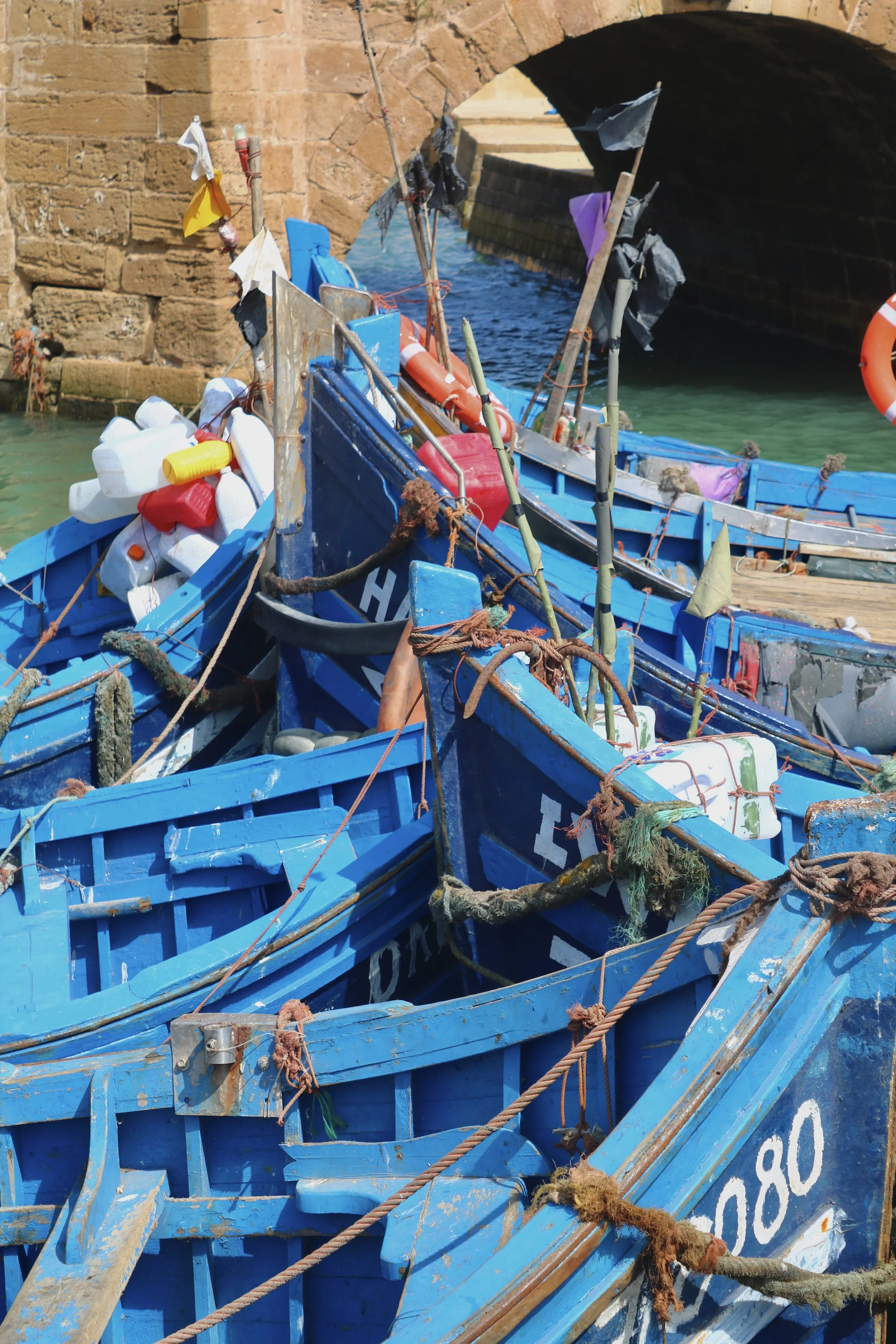
Boats lining the port. Photo credit: Rassech, 2025.
Essaouira cats! Photo credit: Rassech, 2025.
A view of the Port Sqala. Photo credit: Rassech, 2025.
The goods in the Essaouira medina seemed particularly unique: patchwork pants, embroidered denim, brightly colored fabrics, gnawa CDs, etc, alongside more classical goods, like leatherwork, clay pottery, jewelry, and more. Photo credit: Rassech, 2025.
Lunch at the port: we shared some delicious sea bass, prawns, calamari, and sea urchins. Photo credit: Rassech, 2025.
Fishermen bring in a number of goods: squid, sea urchins, sardines, oysters, crab, lobsters, prawns, eels, sharks, rays, and more. Photo credit: Rassech, 2025.
From restaurants where you hand-pick your fish before taking your seat, to stands selling take-away plates of sardines and other snacks, we definitely didn’t leave feeling hungry! Photo credit: Rassech, 2025.
Other (not pictured) sites to visit in Essaouira include the Mellah, or Jewish quarter. Essaouira hosts synagogues, a Jewish cemetery, and the Bayt Dakira museum depicting the history of the Jewish community in the city. Photo credit: Rassech, 2025.
Walking back towards the medina from the fish market, you’ll find a large open square hosting various street performers, cafes, and crepe stands! Photo credit: Rassech, 2025.
It was necessary that we try Fish Pastilla before leaving Essaouira! Pastilla comes in various forms, but this type is a phyllo dough stuffed with shrimp, calamari, fish, and vermicelli. Photo credit: Rassech, 2025.
On our last day in Essaouira, we woke up early in order to visit the weekly Sunday market in the nearby town Had Draa! The early opening hours gave us a chance to enjoy the sunrise from our hostel rooftop. Photo credit: Rassech, 2025.
Had Draa is a smaller town about 30 minutes outside of Essaouira. Its Sunday market attracts a large crowd of people from surrounding areas (Essaouira included). We walked about 15 minutes from our hostel to the Grand Taxi station to catch a ride to the market, though it is also possible to travel via bus. The market opens at sunrise, and it is recommended to go early in order to catch the animal market at peak hours. There’s not much you can’t find at Had Draa — clothing, rope, netting, and other materials, fruit and vegetables, nuts and sweets, school supplies, grilled meat and makouda (battered potato typically paired with harissa, eggplant, and salad in a sandwich—a classic Moroccan street food), tea, herbs, seeds and plants, furniture, and more. While I’d avoided taking photos at the market, I did capture one as we walked through a less crowded section – where shoppers went to purchase freshly butchered meat. Photo credit: Rassech, 2025.
To avoid disturbing market goers with my camera, this is a distant photo of the animal market! As we’d had some trouble finding it, we arrived a bit later in the day, when most of the animals had been cleared out already. At the market, one could purchase a goat, cow, sheep, chick, or hen. After striking up a conversation with one of the sellers, we’d even attempted learning how to milk a cow. Photo credit: Rassech, 2025.
Nadia Rassech is a student studying abroad in the Fall 2025 on Amideast’s Area & Arabic Language Studies program in Rabat, Morocco.