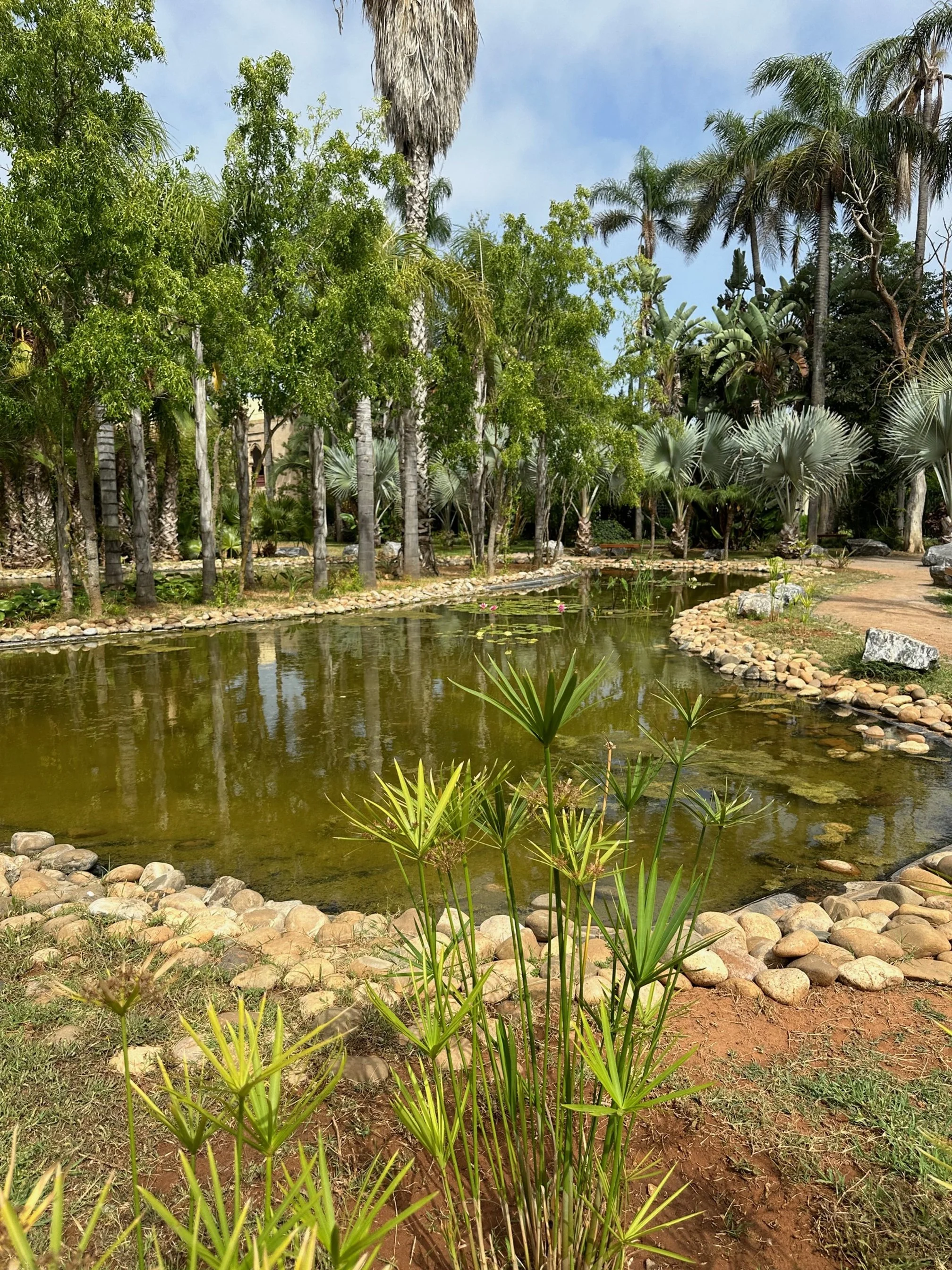
“Reflections from my First Day as an English Tutor in Morocco” by Skyler Korkowski
When I was asked if I wanted to become an English tutor for a family near Rabat, I immediately said yes. I have always loved teaching and was excited to have a new experience and to meet new people during my short time here. However, during my first English lesson, I began to see how difficult it is to explain something that comes so naturally in a way that makes sense to others. Although I had noticed the differences between learning English, my native language and studying my second or third, this tutoring session highlighted the huge differences between how people learn languages depending on how, when, and where they learn them.
The morning before, I went to my Arabic classes nervous to teach my first English lesson. I did not know how much English the family’s three kids already knew and I worried my Arabic and (very limited) Darija would be too weak to get across my lesson to young children. Throughout the day, I scrambled to create lesson plans that would be both fun and beneficial for all three kids and printed a few worksheets for us to work on together before taking the train to their house.
During my train ride, I tried to think of more exercises and activities we could do together and reviewed my simple lesson plans. However, when I made it to the family’s apartment building, I was shocked when I was greeted in clear English and led upstairs. In the elevator, I introduced myself to two of the children, a teenage girl and a little boy, who could already speak and understand much more English than I had anticipated. When I entered the living room, I was met with more English and giggles from the third child, a little boy slightly older than the first. The four of us sat down at a little table near the kitchen and began the lesson. I introduced myself again and had each of the kids do the same and together we filled out worksheets with information about themselves.
Although the two boys knew some English and could read the worksheets well, it was difficult for me to tell how much they understood what they were reading. I heard faint whispers as they tried to get their sister to help them with questions they did not understand but I tried to encourage them to think about the answers themselves and simply explained or acted out what things meant when they began to look flustered. The girl on the other hand was obviously well-versed in English and could easily understand and answer everything I asked her. She told me in-depth stories about what she wanted to be when she grew up, the books she had written, and the many anime series she has watched.
As she began asking me to explain grammar like the past perfect, irregular past participles, the rule for using “he” versus “him” I realized that my knowledge of English grammar revolves much less around the names of different tenses and concepts but instead how they sound or feel in a certain context. I found myself wanting to say “it’s just like this because it is” or “it just sounds good” when we were correcting the short essays she wrote for me, which would have turned me into my worst nightmare in any foreign language class. I have always been a similar student in my foreign language classes, asking about the name of different grammar concepts and their specific rules. Yet, I could not answer many of her questions in English. Did I even know English? I thought to myself. If she had asked me the same questions about Arabic, Spanish, or French, the languages I have studied in school, I probably could have had better answers, but in my own native language, I was stuck. I found myself worried about giving the wrong names for certain things or spelling words the wrong way. I frantically Googled the difference between tenses and how to conjugate certain verbs as we filled out conjugation charts together.
From conjugation tables and short essays to simple introductions and names of sports, colors, and numbers, I jumped back and forth between my lessons with the two little boys and older girl. Somewhere in between the talking, writing, watching videos, and reading short stories together, we started playing soccer in the living room and dancing around so we were able to refocus and revive. As the lesson came to a close, I made notes of the English concepts and rules that I needed to study to prepare for our next lessons and asked about what else they wanted to learn. When we finally finished with a cup of Moroccan tea, dates, and nuts, I felt both relieved and excited to not only be able to continue to share my native language with these amazing kids but also to be able to learn more about English myself.
Here’s to always learning!
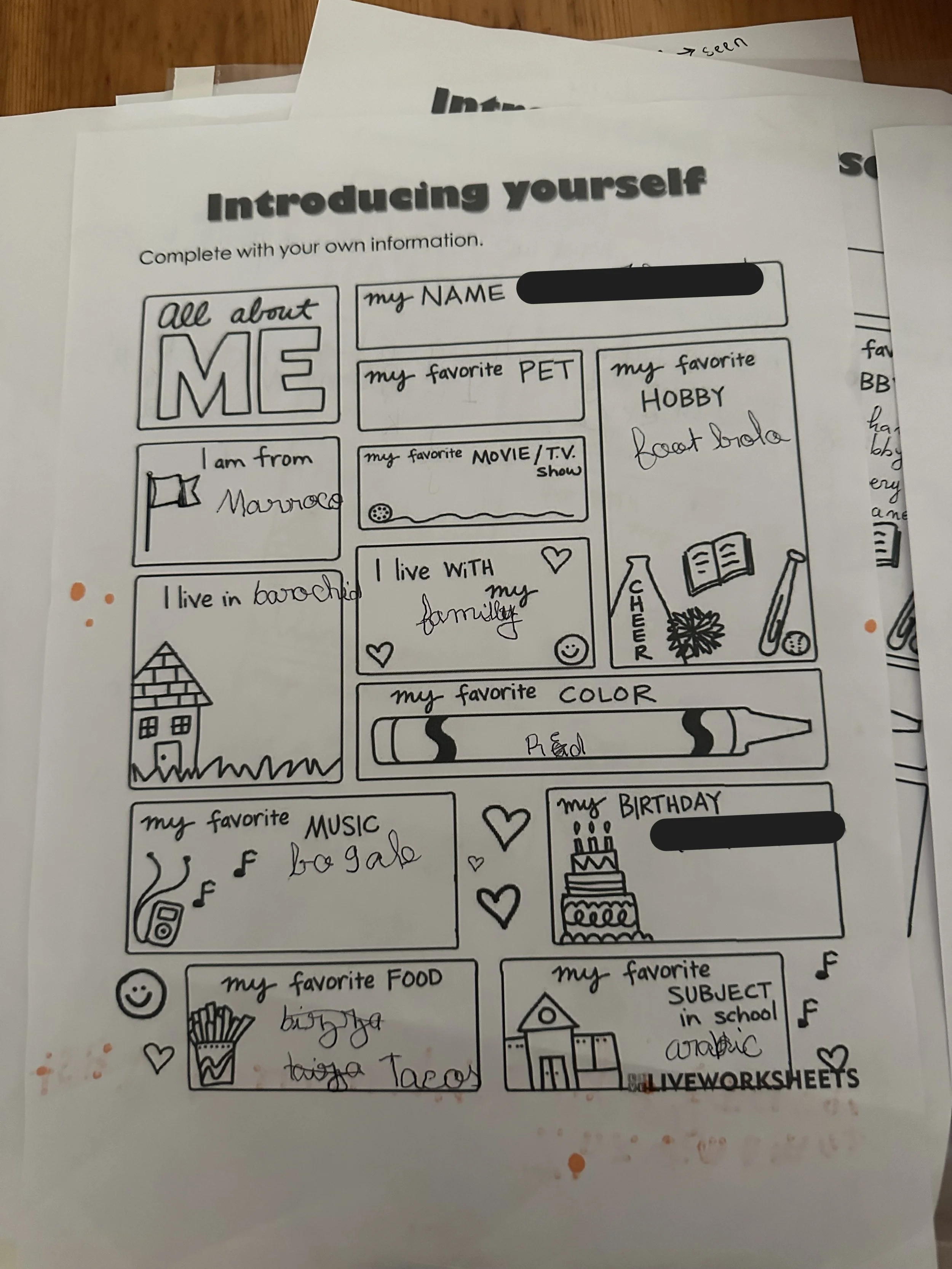
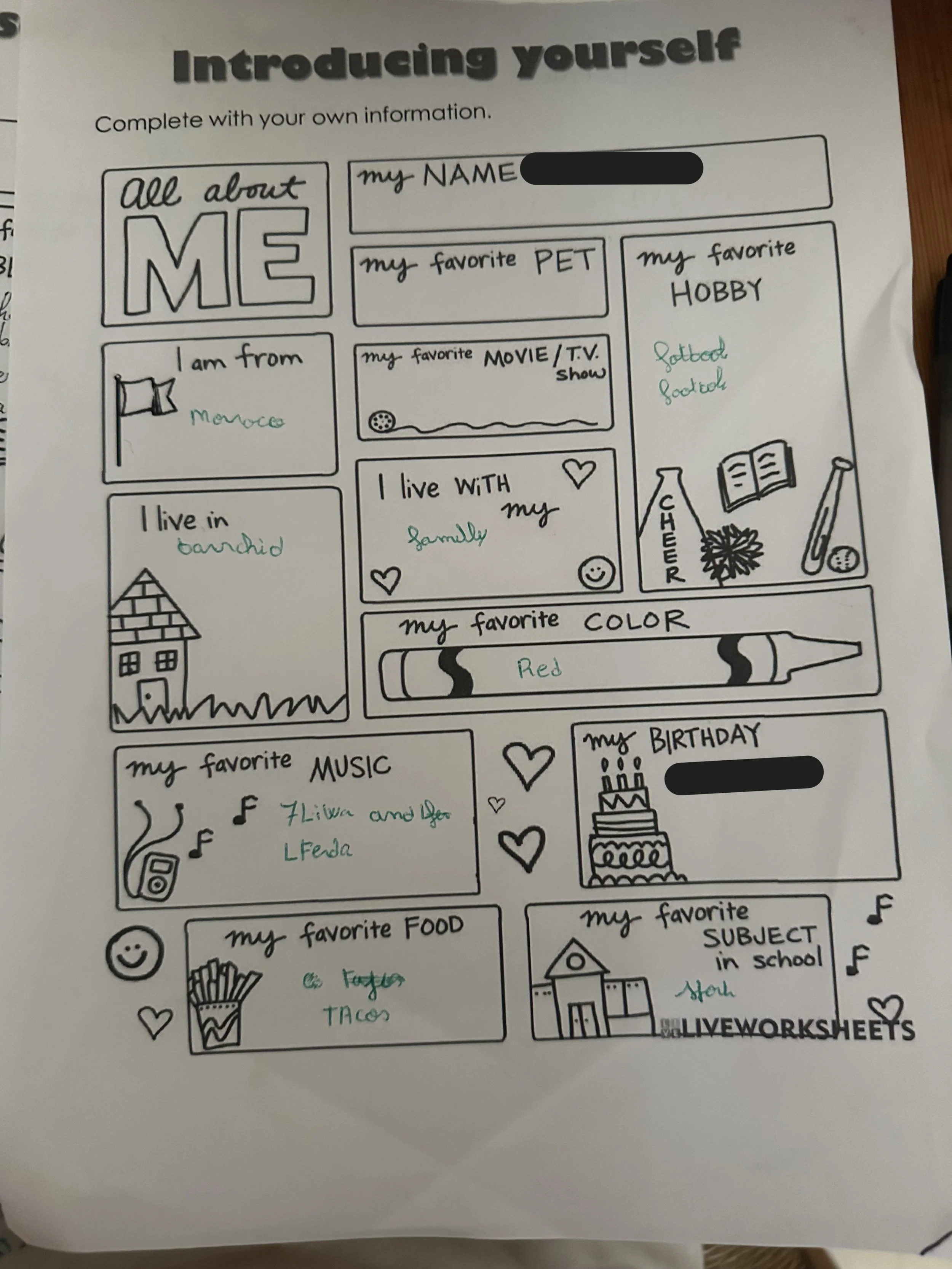
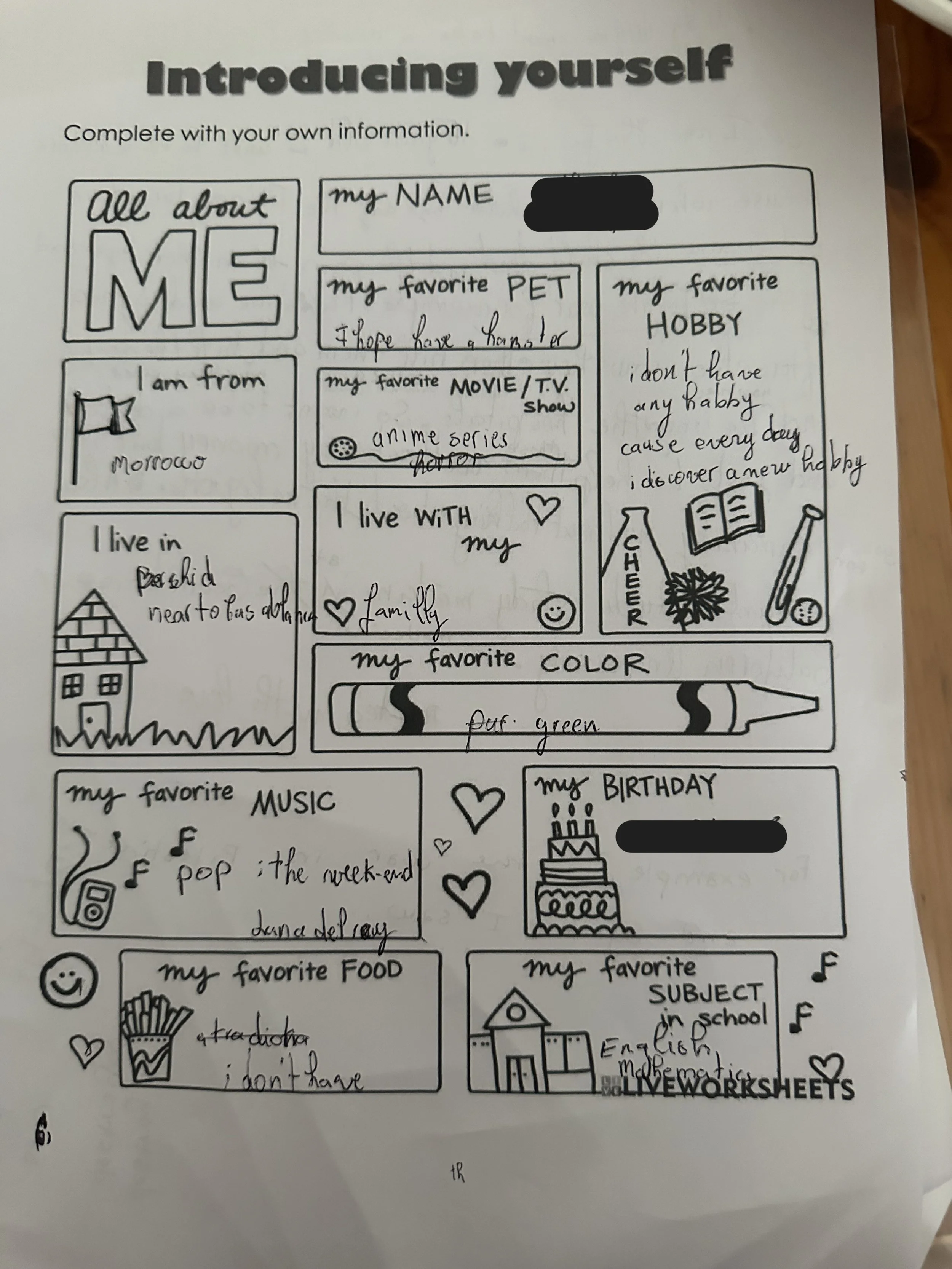
The kids’ self introduction worksheets from our first English lesson together :) Photo credit: Korkowski, 2024.
Skyler Korkowski is a student at the University of Southern California and is studying abroad on the Amideast Intensive Arabic Program in Morocco this Summer, 2024.